
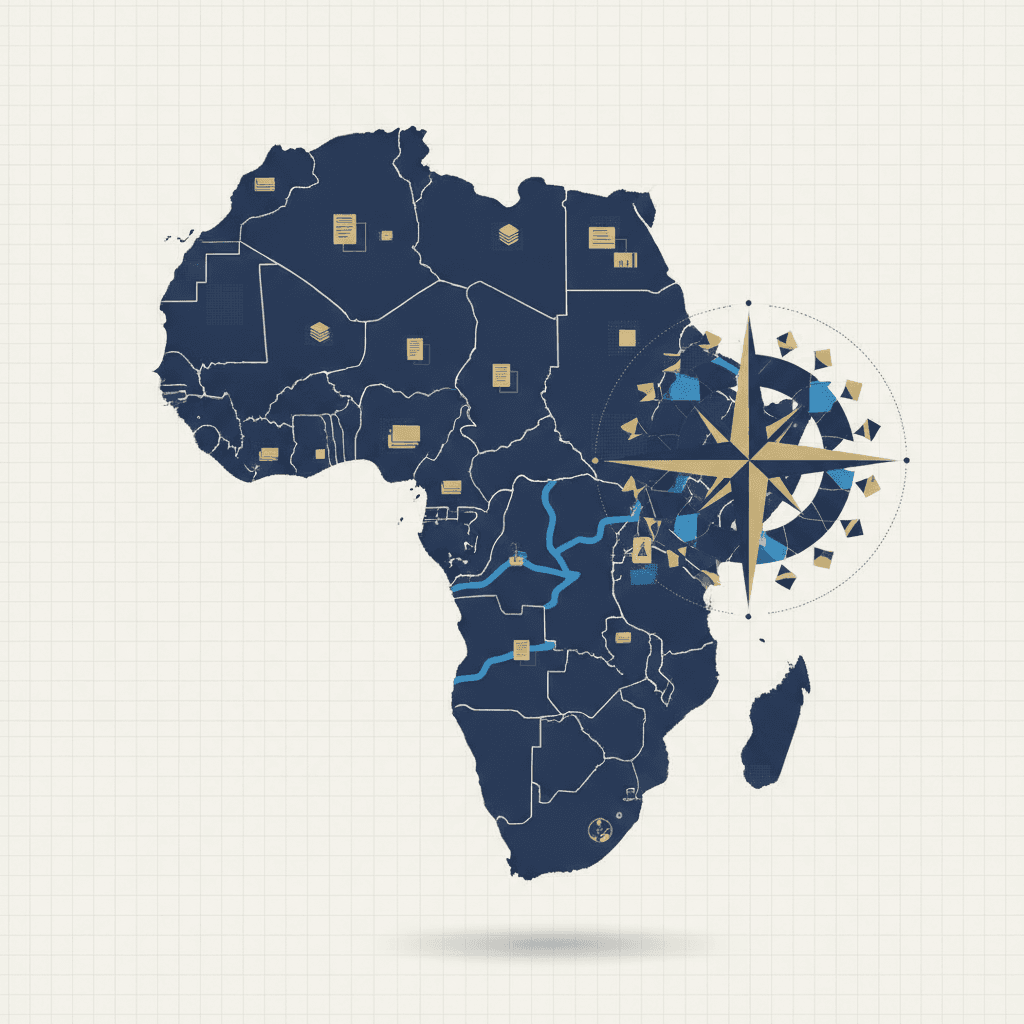
This week, an article published by Guardian Nigeria on Monday, October 26, 2026, highlighted a critical challenge for African fintech growth: widespread regulatory uncertainty and fragmented operational systems across the continent. Fintech, or financial technology, refers to innovative technologies improving financial services. This isn't just a theoretical concern for founders; it poses concrete, immediate risks and compliance hurdles for Ethiopian financial institutions, microfinance institutions (MFIs), and other entities looking to innovate or expand their digital offerings.
The article underscored that the limitations of Africa’s financial infrastructure extend beyond differing regulations to the fundamental operational systems. A fintech platform successful in one country might require entirely different banking integrations, identity-verification procedures, settlement arrangements, and customer support processes to function effectively in another. For compliance officers at Ethiopian organisations – professionals ensuring adherence to laws, regulations, and internal policies – this signals a need for strategic foresight and proactive measures to mitigate risks and seize opportunities in a continent increasingly interconnected, yet still largely disparate in its regulatory and operational frameworks.
The Dual Challenge: Regulatory Fragmentation and Operational Disparity
Africa’s fintech landscape is vibrant, attracting significant investment and fostering innovation that drives financial inclusion. However, this dynamism is often met with a patchwork of national regulations. While some countries are embracing regulatory sandboxes (controlled environments for testing new financial products under relaxed oversight), others operate with older frameworks, or, in some cases, a regulatory vacuum. This creates an environment where a compliance officer must not only understand their domestic rules but also anticipate and adapt to the diverse requirements of potential regional markets.
The operational disparities are equally challenging. Imagine an Ethiopian bank looking to offer cross-border payment services within East Africa. They might face different data protection laws, varying standards for Know Your Customer (KYC) and Customer Due Diligence (CDD) – processes for verifying client identity and assessing suitability – and incompatible payment rails or identity verification databases. This complexity escalates the risk of non-compliance, operational inefficiencies, and potential financial crime vulnerabilities, including Anti-Money Laundering (AML) and Combating the Financing of Terrorism (CFT) risks.
The Malabo Convention: A Glimmer of Harmonisation in Data Protection
Amidst this fragmentation, there are efforts towards harmonisation, particularly in critical areas like data protection and cybersecurity. The African Union Convention on Cyber Security and Personal Data Protection, commonly known as the Malabo Convention, adopted on October 8, 2026, aims to be Africa's main continental treaty addressing these issues. It seeks to harmonise national approaches to cybersecurity, cybercrime, electronic transactions, and personal data protection.
While Ethiopia has its own evolving legal and regulatory framework, the Malabo Convention represents a significant regional benchmark. Even if Ethiopia has not yet ratified it, or specific implementing legislation is still pending, the Convention’s principles offer a blueprint for best practices. For any Ethiopian institution handling personal data, especially if engaging in cross-border activities or partnering with entities in countries that have ratified or are aligning with Malabo, understanding its tenets is crucial. It signals a regional direction towards more robust data governance and cybersecurity standards.
So What Does an Ethiopian Organisation Actually Do About It?
For an Ethiopian Compliance Officer, Money Laundering Reporting Officer (MLRO), or Risk Manager, the fragmented African fintech landscape and the emerging regional data protection standards like the Malabo Convention are not distant issues. They demand concrete, actionable responses. Here are practical steps your organisation can take:
1. Develop a Robust Regulatory Intelligence Framework
Given the rapid pace of change, especially in fintech and data protection, continuous monitoring is non-negotiable.
- Action: Establish a dedicated regulatory intelligence unit or assign specific compliance personnel to monitor regulatory developments in key African markets (e.g., Kenya, Rwanda, Nigeria, South Africa) and relevant regional bodies such as the East African Community (EAC), Common Market for Eastern and Southern Africa (COMESA), and Eastern and Southern Africa Anti-Money Laundering Group (ESAAMLG). This includes tracking new fintech licenses, data protection laws, and updates to AML/CFT guidelines.
- Control: Implement a system for cataloging and analysing regulatory updates, assessing their potential impact on your organisation's current and future operations, especially regarding cross-border services.
- Policy Change: Update your internal compliance policy to include a mandate for proactive regional regulatory scanning and impact assessments.
2. Strengthen Cross-Border Compliance Protocols for Digital Services
If your organisation plans to offer digital services across borders or partner with regional fintechs, your compliance framework must be adaptable.
- Action: Conduct a gap analysis between Ethiopia's current regulatory requirements (e.g., National Bank of Ethiopia directives, upcoming Ethiopian Capital Market Authority (ECMA) rules) and those of potential target markets for digital services. Pay close attention to differences in KYC/CDD, AML reporting thresholds, consumer protection, and data privacy.
- Control: Implement a multi-jurisdictional compliance manual or addendum that outlines specific procedures for each market where you operate or interact. This should cover varying identity verification methods, settlement processes, and dispute resolution mechanisms.
- Training Action: Provide targeted training to relevant teams (e.g., product development, operations, customer service, legal) on the nuances of cross-border compliance, emphasising the need for flexibility and adherence to the highest applicable standard.
3. Embrace Data Protection Principles Aligned with Regional Standards
The Malabo Convention, while not yet fully ratified by all AU member states, sets a clear precedent for data protection and cybersecurity across the continent. Ethiopian organisations should proactively align with these principles.
- Action: Conduct a comprehensive data mapping exercise to understand what personal data your organisation collects, stores, processes, and shares, identifying data flows (especially cross-border).
- Control: Implement a “Privacy by Design” and “Security by Design” approach for all new digital products and services, integrating data protection and cybersecurity from the outset.
- Policy Change: Draft or update your organisation's data protection policy to incorporate principles of lawful processing, purpose limitation, data minimisation, accuracy, storage limitation, integrity and confidentiality, and accountability, mirroring Malabo's tenets. Include clear guidelines for obtaining consent, managing data subject rights, and handling data breaches.
- Training Action: Roll out mandatory training for all employees on data protection, privacy best practices, and cybersecurity awareness. For staff handling sensitive data or involved in cross-border operations, provide in-depth training on regional data protection standards and their implications.
4. Enhance Cybersecurity and Operational Resilience
The Malabo Convention also addresses cybersecurity and cybercrime. A fragmented operational landscape increases attack surfaces (points where unauthorised users can attempt to access systems) and vulnerabilities.
- Action: Review and strengthen your organisation's cybersecurity framework, focusing on threat detection, incident response planning, and data recovery capabilities. Ensure alignment with international best practices and regional guidelines.
- Control: Implement robust access controls, encryption for data in transit and at rest (protecting data during movement and storage), and regular vulnerability assessments and penetration testing (simulated attacks to identify weaknesses). Pay particular attention to third-party vendor risk management, especially for partners providing critical infrastructure or data processing services.
- Policy Change: Develop or update an incident response plan that specifically addresses data breaches and cyber incidents, including notification procedures for regulators and affected data subjects across different jurisdictions.
5. Leverage Technology for Compliance Management
Manual processes are increasingly insufficient for managing complex, multi-jurisdictional compliance requirements.
- Action: Explore and invest in RegTech solutions (regulatory technology using innovation to enhance compliance processes) that can help automate regulatory monitoring, compliance reporting, and risk assessments. This could include platforms that track changes in regional regulations or provide automated alerts for compliance deadlines.
- Control: Implement a centralised compliance management system to maintain records of policies, procedures, training completion, and audit trails for all compliance activities.
Future-Proofing Ethiopian Compliance
The African regulatory landscape, while challenging, also presents immense opportunities for Ethiopian institutions willing to navigate its complexities with diligence. Proactive compliance is not just about avoiding penalties; it's about building trust, enabling secure innovation, and fostering sustainable growth in a rapidly digitising continent.
For compliance professionals seeking to deepen their understanding of these evolving regional dynamics and build robust frameworks, DaraCorp offers practical, Africa-focused training. Consider our course, Fintech Compliance and the ECMA Regulatory Sandbox, which provides essential insights into navigating the regulatory environment for digital financial services, including the critical role of data protection and operational resilience.
Share this article: